A laser cutting head is one of the most important parts of a fiber laser cutting machine. It works close to heat, metal spatter, dust, smoke, high-pressure assist gas and moving sheet metal. Because of this, even a small problem inside the head can affect cutting quality.
When a problem appears, the first question is often simple: should the laser head be repaired, or is it better to replace it?
There is no universal answer for every machine. The correct decision depends on the head model, laser power, damage level, spare parts availability, downtime cost and production requirements. This article gives a practical way to make this decision.
Why This Decision Matters
Repairing a laser head can be the correct solution when the problem is limited, visible and serviceable. Replacing the head can be the better solution when the damage is deep, repeated or too risky for production.
A wrong decision can create several problems:
- repeated downtime;
- unstable cutting quality;
- unnecessary spare parts cost;
- risk of optical damage;
- long troubleshooting time;
- poor reliability after repair;
- emergency machine stop during production.
The goal is not to repair everything. The goal is to return the machine to stable and predictable cutting.
First Step: Identify the Real Problem
Before deciding between repair and replacement, identify what has actually failed.
Many cutting problems are not caused by the head body itself. They may come from consumables, gas, cooling, cutting parameters or poor calibration.
Check first:
- nozzle condition;
- ceramic body or ceramic ring;
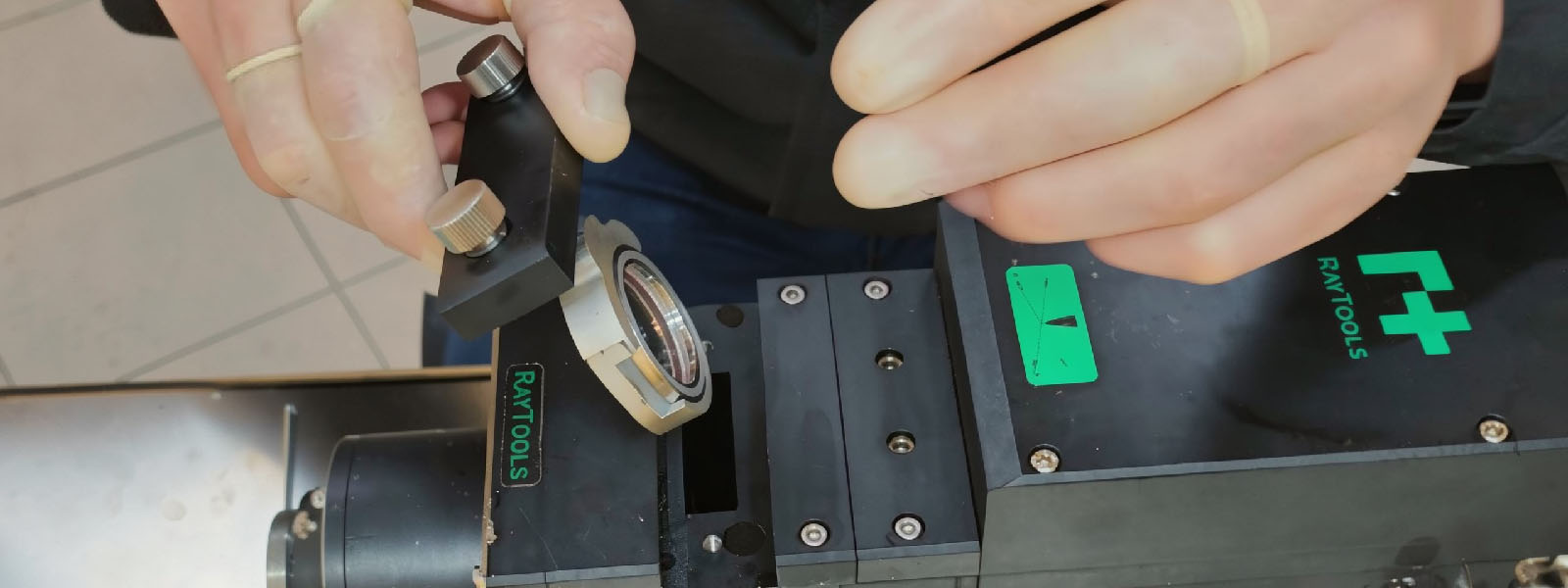
- protective window;
- assist gas pressure and cleanliness;
- cooling water flow and temperature;
- beam centering;
- focus position;
- height sensing calibration;
- cables and connectors;
- recent collision or crash history.
Do not replace the full laser head before checking simple causes. A dirty protective window or damaged nozzle can look like a serious head problem.
When Repair Usually Makes Sense
Repair is usually reasonable when the damaged part is clear, accessible and replaceable.
Typical repair cases include:
- damaged nozzle;
- cracked ceramic body;
- contaminated protective window;
- worn seals or O-rings;
- damaged protective window holder;
- loose connector;
- external cable damage;
- minor gas leakage;
- damaged sensor-related small part;
- contamination after normal production use.
In these cases, the main head body may still be in good condition. Replacing the correct consumable or service part can return the machine to stable cutting.
Repair also makes sense when:
- the head model is still supported;
- original or compatible spare parts are available;
- there is no serious mechanical deformation;
- internal optics are not burned or cracked;
- the repair can be tested after service;
- downtime for repair is acceptable.
A repair should always be followed by inspection, calibration and test cutting.
When Replacement Should Be Considered
Replacement should be considered when repair will not restore stable operation or when the risk of repeated failure is too high.
Typical replacement cases include:
- strong head crash with body deformation;
- damaged internal optical path;
- repeated protective window damage without clear external cause;
- burned or damaged internal lenses;
- damaged focusing or collimating module;
- unstable operation after several correct repairs;
- unavailable spare parts;
- outdated head model;
- upgrade to higher laser power;
- repeated failures that stop production;
- repair cost close to replacement cost.
If the head body is mechanically damaged, repair may not be enough. Even a small deformation can affect alignment, sealing, cooling or height sensing.
Replacement is also reasonable when production reliability is more important than saving the old head.
Repair or Replace After a Head Crash
A collision is one of the most common reasons for laser head damage.
After a crash, do not continue production immediately, even if the head looks normal from outside. A small mechanical shift can create poor cutting quality or damage consumables repeatedly.
Check after a crash:
- nozzle;
- ceramic body;
- protective window;
- head body;
- mounting position;
- height sensing;
- cables;
- gas connection;
- cooling connection;
- beam centering;
- focus stability.
If only the nozzle and ceramic body are damaged, repair may be enough. If the head body is bent, the optical path is unstable, or centering cannot be restored, replacement should be considered.
| After-crash result | Practical decision |
|---|---|
| Nozzle damaged only | Replace nozzle and test |
| Ceramic body cracked | Replace ceramic body and calibrate |
| Protective window contaminated | Clean or replace window |
| Head body has visible deformation | Consider replacement |
| Beam cannot be centered | Service inspection or replacement |
| Problems repeat after repair | Replacement may be safer |
Optical Damage: Be Careful
Optical damage is one of the most important factors in the repair-or-replace decision.
Protective windows are designed to protect internal optics. If the protective window is dirty or damaged, it should be cleaned or replaced according to the correct procedure. But if contamination has reached deeper optical components, the repair becomes more serious.
Possible signs of optical problems:
- cutting quality drops even with new consumables;
- protective windows become dirty very quickly;
- power at the workpiece seems unstable;
- focus behavior changes;
- piercing becomes unstable;
- burn marks are visible on optical parts;
- cutting gets worse after several minutes of operation.
Internal optical inspection should only be done by trained personnel in clean conditions. Do not open optical modules in a dirty workshop area. Dust, fingerprints or wrong cleaning materials can create additional damage.
If internal optics are burned, cracked or repeatedly contaminated, replacement of the module or the complete head may be more reliable than repeated small repairs.
Mechanical and Cooling Problems
A laser head is not only an optical part. It also includes mechanical, gas, cooling and sensing systems.
Repair may be possible when the issue is limited:
- loose fitting;
- damaged seal;
- minor gas leakage;
- blocked or dirty connection;
- external cable problem;
- replaceable holder or cartridge.
Replacement may be better when there is:
- body deformation;
- damaged mounting surface;
- repeated water leakage;
- damaged internal cooling channel;
- unstable temperature behavior;
- damaged thread or seating area;
- recurring sealing failure after repair.
Cooling problems should not be ignored. If the head overheats or cooling is unstable, the optical system can be damaged. Before replacing the head, check the chiller, water flow, hoses, filters and connections.
Cutting Quality Problems: Do Not Blame the Head Too Early
Poor cutting quality does not always mean that the head must be repaired or replaced.
Before making a decision, check:
- material quality;
- nozzle diameter and type;
- nozzle centering;
- protective window condition;
- ceramic body condition;
- gas pressure;
- gas purity;
- focus position;
- cutting speed;
- piercing parameters;
- cutting database;
- lens contamination;
- machine calibration.
If the problem started after changing a nozzle, protective window or cutting program, the head itself may not be the main cause.
Use a simple rule: inspect and test low-cost causes before replacing high-cost components.
Cost and Downtime Logic
The decision should include both technical and economic factors.
Repair may be better when:
- the damage is clear;
- spare parts are available;
- repair time is short;
- the head is not obsolete;
- the repair cost is much lower than replacement;
- production can wait for inspection and testing.
Replacement may be better when:
- repair requires several expensive parts;
- the machine has already stopped many times;
- the head is old or unsupported;
- spare parts are hard to find;
- production downtime is very expensive;
- reliability after repair is uncertain;
- the customer requires stable delivery times.
The cheapest option is not always the lowest-cost option. A low-cost repair that fails again after two days can be more expensive than planned replacement.
Practical Decision Table
| Situation | Repair is usually reasonable | Replacement should be considered |
| Damaged nozzle | Yes | No |
| Cracked ceramic body | Yes | No |
| Dirty protective window | Clean or replace window | No |
| Minor seal leakage | Yes | No |
| External cable damage | Usually yes | If repeated or internal |
| Head crash | If damage is limited | If body or alignment is damaged |
| Internal optics burned | Service inspection required | Often yes |
| Repeated failures | Maybe not | Yes |
| Spare parts unavailable | Difficult | Yes |
| Upgrade to higher power | Not always | Often yes |
| Old unsupported head | Sometimes | Often yes |
This table gives a practical starting point. The final decision should be made after inspection.
What Information Helps Before Service Inspection
Good information reduces troubleshooting time.
Before contacting service support, prepare:
- cutting head model;
- machine model;
- laser source power;
- material and thickness;
- assist gas;
- nozzle type and diameter;
- protective window condition;
- ceramic body condition;
- error messages;
- photos of the head, nozzle and cut edge;
- photos after a crash, if any;
- when the problem started;
- what was changed before the problem appeared;
- what checks were already done.
Clear photos are especially useful. They help separate a consumable problem from mechanical damage, optical contamination, gas supply issues or calibration errors.
Basic Inspection Before Making the Decision
Use this checklist before deciding to repair or replace the head:
- inspect the nozzle;
- inspect the ceramic body;
- inspect the protective window;
- check gas pressure and leaks;
- check cooling water flow and temperature;
- check cables and connectors;
- check beam centering;
- perform calibration if required;
- make a test cut;
- compare the result with previous stable settings;
- record all changes.
If the machine becomes stable after these checks, full replacement is probably not required. If problems remain after correct service actions, deeper repair or replacement should be considered.
When Planned Replacement Is Better Than Emergency Repair
Sometimes the best decision is not immediate replacement, but planned replacement.
This is useful when:
- the head still works, but failures are becoming more frequent;
- spare parts are becoming harder to find;
- the machine will be upgraded;
- the workshop plans to cut thicker or more reflective materials;
- downtime during production season is expensive;
- the current head does not match new production tasks.
Planned replacement gives the workshop time to prepare:
- correct head model;
- compatible consumables;
- machine interface;
- cooling and gas requirements;
- cutting database;
- installation time;
- operator training;
- emergency spare parts.
This is safer than waiting until the head fails during an urgent order.
Conclusion
A laser head should be repaired when the problem is limited, clear and serviceable. Typical repair cases include nozzles, ceramic bodies, protective windows, seals, holders, external cables and minor service parts.
Replacement should be considered when the head has serious mechanical damage, unstable optical behavior, repeated failures, unavailable spare parts or repair cost close to replacement cost.
Do not make the decision only by the price of parts. Consider downtime, reliability, production risk and future machine tasks.
The best decision is the one that returns the laser machine to stable cutting with predictable quality and acceptable risk.